
Checking Criminal History in Charleston
Start with the Charleston record maker. Charleston Police is the right office for a police narrative or arrest report, while the Charleston City Recorder maintains the municipal court docket. Present Charleston custody belongs to the Bradley County jail, and state-law charges move through Bradley County General Sessions or Circuit Criminal Court. Tennessee Bureau of Investigation records add the statewide repository layer. One Charleston name may therefore appear in several systems without any one source telling the full story.
Use a narrow, ordered search so the results can be matched by date, charge, and record number:
- Ask Charleston Police for the incident or arrest report created by its officer. Give the date, location, and report number when known.
- Ask the City Recorder about a Charleston citation or municipal docket, including its status, next setting, disposition, and copy options.
- Call Bradley County jail for current custody, booking, bond, hold, or release facts.
- Check General Sessions for the first state-law case and Circuit Criminal for an indicted felony. The detailed county route appears in the Bradley County criminal court cases resource.
- Use TORIS only for the Tennessee history reported to TBI, then compare it with the local disposition.
Charleston Keeps Its Police Records
A county jail booking does not transfer ownership of a Charleston Police report to the sheriff. The Charleston department remains the custodian of the report its officer wrote. That distinction matters when someone wants the Charleston narrative, probable-cause facts, property details, or other releasable parts of the original event record. The Bradley County Sheriff's Office can answer its own custody questions, but it cannot replace Charleston's file.
The official Charleston city page shows the city's local government entry point and service structure.
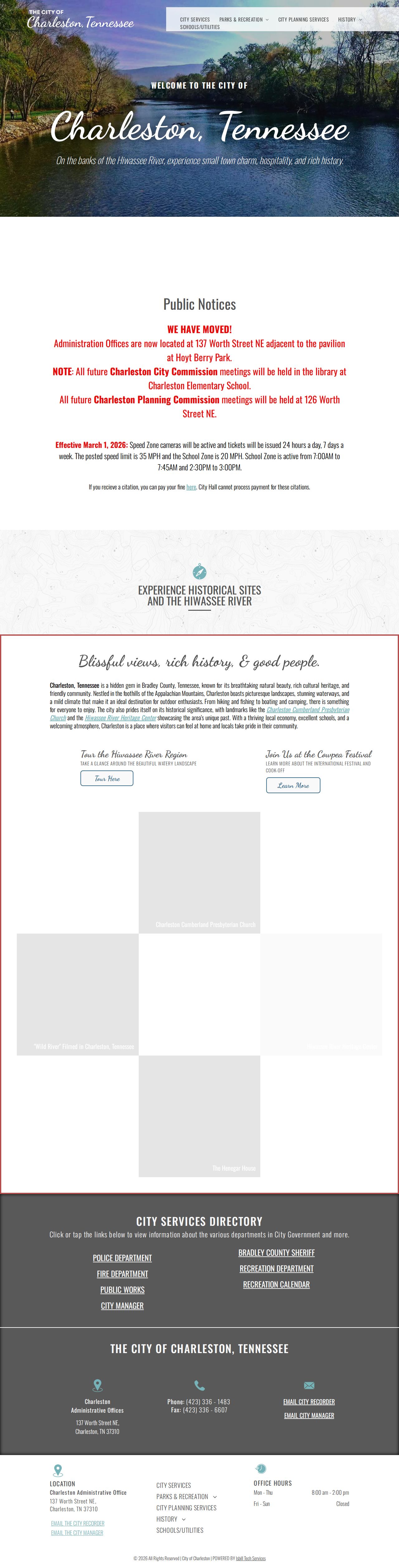
That Charleston source is the sound starting place when a Charleston office, contact, or procedure may have changed.
Charleston Police Department Records
Charleston Police is based at 126 Worth Street NE, Charleston, Tennessee 37310. The official Charleston listing names Chief John Farris and gives chiefofpolice@charlestontn.gov for department contact. Charleston emergency calls go to 911. Nonemergency police dispatch runs through Bradley County Communications at 423-728-7311, not City Hall. Charleston citation questions go to 423-336-1483. These channels serve different needs, so a requester should not use the emergency line for a routine copy question.
A focused Charleston police-record request identifies an existing document instead of asking the city to research a broad history. Include Charleston Police, the event or report number if known, the incident date, the place, and the exact record sought. State whether inspection or a copy is wanted, request an electronic format when practical, and ask for a cost estimate before work begins. Tennessee citizenship verification may depend on Charleston's current TPRA policy.
The Charleston city-services page publishes the police and citation contacts used for local record routing.
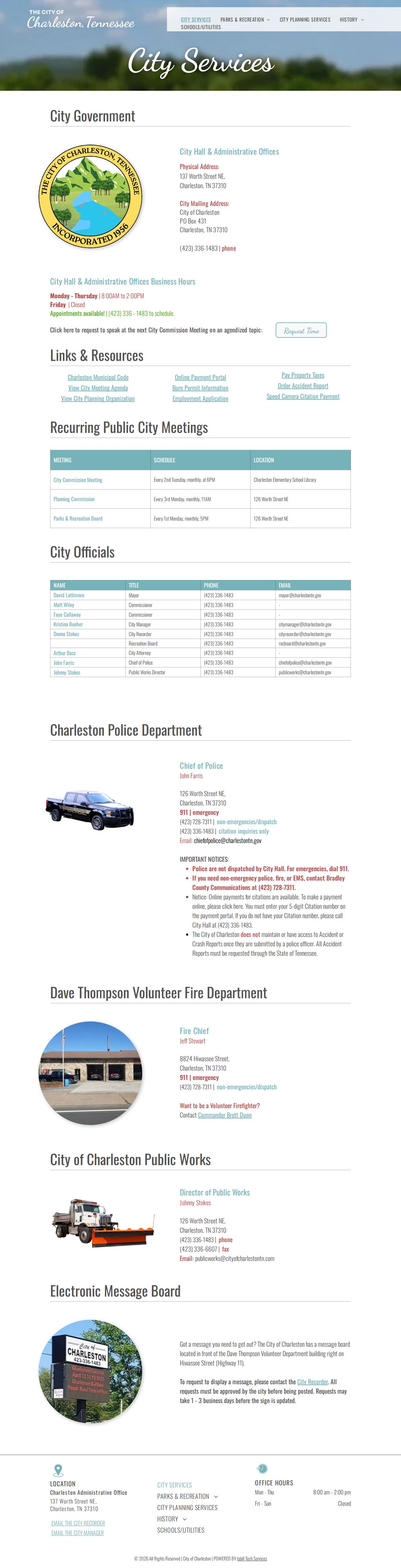
The Charleston page also makes clear that Charleston City Hall does not dispatch police, a small but useful local detail.
Charleston Crash Records Leave City Hands
Charleston uses a special route for crash reports. Charleston says it does not retain or access the report after an officer submits it. An involved Charleston party instead uses Tennessee's official crash-report purchase system. The state portal verifies involvement and asks for party and crash details before purchase. It accepts Visa, Mastercard, American Express, and Discover, but not prepaid cards. The published Charleston report charge is $10, and a successful user may save or print the result.
This is narrower than a Charleston criminal record search. A crash report documents a traffic event; it is not a city court docket or a statewide history. The official Tennessee crash-report portal is the approved purchase channel.
The Charleston crash result can then be saved or printed, but it suppresses addresses and may not mirror every field from the officer's working file.
Charleston Arrests and Bookings
A Charleston arrest can create at least four related Charleston records. The officer creates the incident or arrest report. Jail intake creates a Charleston booking record with custody times, arrest charges, bond or hold data, and release status. The court creates a Charleston case file when legal proceedings begin. A fingerprintable arrest may also produce a TBI arrest cycle that later receives a disposition. Those records can differ because each captures a different stage.
For a recent event, contact Charleston Police for the narrative and Bradley County jail at 423-728-7367 for custody. General Sessions Criminal at 423-728-7050 handles many first-stage state-law matters. An indicted felony moves to Circuit Criminal, 423-728-7057. The Bradley County arrest lookup explains the wider booking and custody chain without turning an arrest into proof of guilt.
Note: A booking charge records the intake allegation; only the court docket shows whether prosecutors changed it and how the case ended.
When Charleston Records Do Not Match
Differences in Charleston records are not always errors. A Charleston Police report may use the officer's initial arrest label, while a prosecutor files a different Charleston count. The jail preserves the charge used at intake. General Sessions may later dismiss, amend, or bind over the Charleston matter, and Circuit Criminal may assign another case number after indictment. TORIS depends on identifiers, fingerprint reporting, and the later disposition reaching TBI.
Compare the Charleston event date, arresting agency, report number, booking number, and court number before deciding two entries concern the same event. Then get the final Charleston docket or certified disposition from the court that decided the case. If the Charleston police report is wrong, contact the city department. If the Charleston docket is wrong, contact the Bradley clerk. For a TBI record error, use the agency's challenge process with certified court proof. Each custodian corrects its own layer.
Municipal Court Records in Charleston
Charleston City Court handles Charleston municipal and citation matters within its legal authority. It is not the felony trial court. Under the Charleston municipal code, the Charleston City Recorder serves as court clerk and keeps the docket. A requester may ask for a Charleston citation or case number, status, next setting, disposition, payment or copy options, and whether inspection needs an appointment. No verified public Charleston case-search form was found, so the clerk-and-counter route is the correct fallback.
The Charleston payment tool asks for a five-digit citation number. Call 423-336-1483 if that Charleston number is unknown. A payment receipt proves a payment transaction, not a complete Charleston criminal history.
| Court Name | Charleston City Court, with the City Recorder acting as court clerk |
|---|---|
| Case Types Heard | Municipal and citation matters within city authority, rather than felony trials |
| Case Lookup Channel | City clerk contact at 423-336-1483; no verified public case-search interface |
| What the Docket Shows | Defendant name, summons number, alleged offense, disposition, penalties and costs, and collection status |
| Copies & Fees | Ask the clerk about inspection and copies; payment charges are separate from record-copy costs |
Charleston Citation Status and Costs
Charleston's June 2025 municipal code material reports court costs of $125 for speeding and $120 for other nonparking matters, plus state litigation taxes. Certain listed matters carry $130 in court costs. Because a live citation can include more than one component, confirm the exact balance and current code with the clerk before paying. An appeal to Circuit Court is due within ten days, excluding Sundays, with the prescribed bond under the city code.
The online payment vendor applies its own processing schedule. Visa, Mastercard, and Discover payments under $60 carry $1.75; payments above $60.01 carry 3 percent. American Express carries 3 percent plus $1.75, while an ACH or e-check payment carries $1.75. The payment screen also collects customer type, name or business, address, email, phone, amount, payment details, fee acceptance, and comments. These fields process money. They do not search court history.
Where Charleston Records Go
Charleston keeps the police report and municipal docket it creates. A Charleston state-law prosecution moves beyond city control. General Sessions commonly provides the first Bradley County court layer, while an indicted Charleston felony proceeds in Circuit Criminal Court at the Judicial Complex. The final disposition should then be reported to TBI so it can be linked to the earlier Charleston arrest cycle. Delays, unmatched identifiers, or a missing fingerprint submission can leave gaps.
Record flow: Charleston Police › Bradley County Courts › Tennessee Bureau of Investigation
For a very recent Charleston event, Charleston Police and county jail channels are more timely. For what the court finally decided about the Charleston case, use the Bradley clerk. TORIS is the later Tennessee repository view, not a substitute for either source. This order helps prevent a stale Charleston arrest label from being mistaken for the final charge or outcome.
Reading Charleston Crime Records Carefully
TBI's 2023 report attributed 18 Group A offenses, five Charleston clearances, and 20 adult arrests to Charleston Police, using a Charleston agency population estimate of 680. The Charleston offense total included two aggravated assaults, two burglaries, four vandalism offenses, and four combined drug or equipment violations. These are Charleston agency reports for a completed year. They are not a count of people with criminal histories, and Charleston arrests can relate to incidents outside the reporting period.
Small Charleston totals can change sharply from one year to the next. Raw counts and a clear year label are more honest than a broad crime-rate claim. Do not add Charleston Police, Cleveland Police, and sheriff figures and call the sum people or cases. The TBI CrimeInsight portal lets readers select the Charleston Police agency and examine the stated measure.
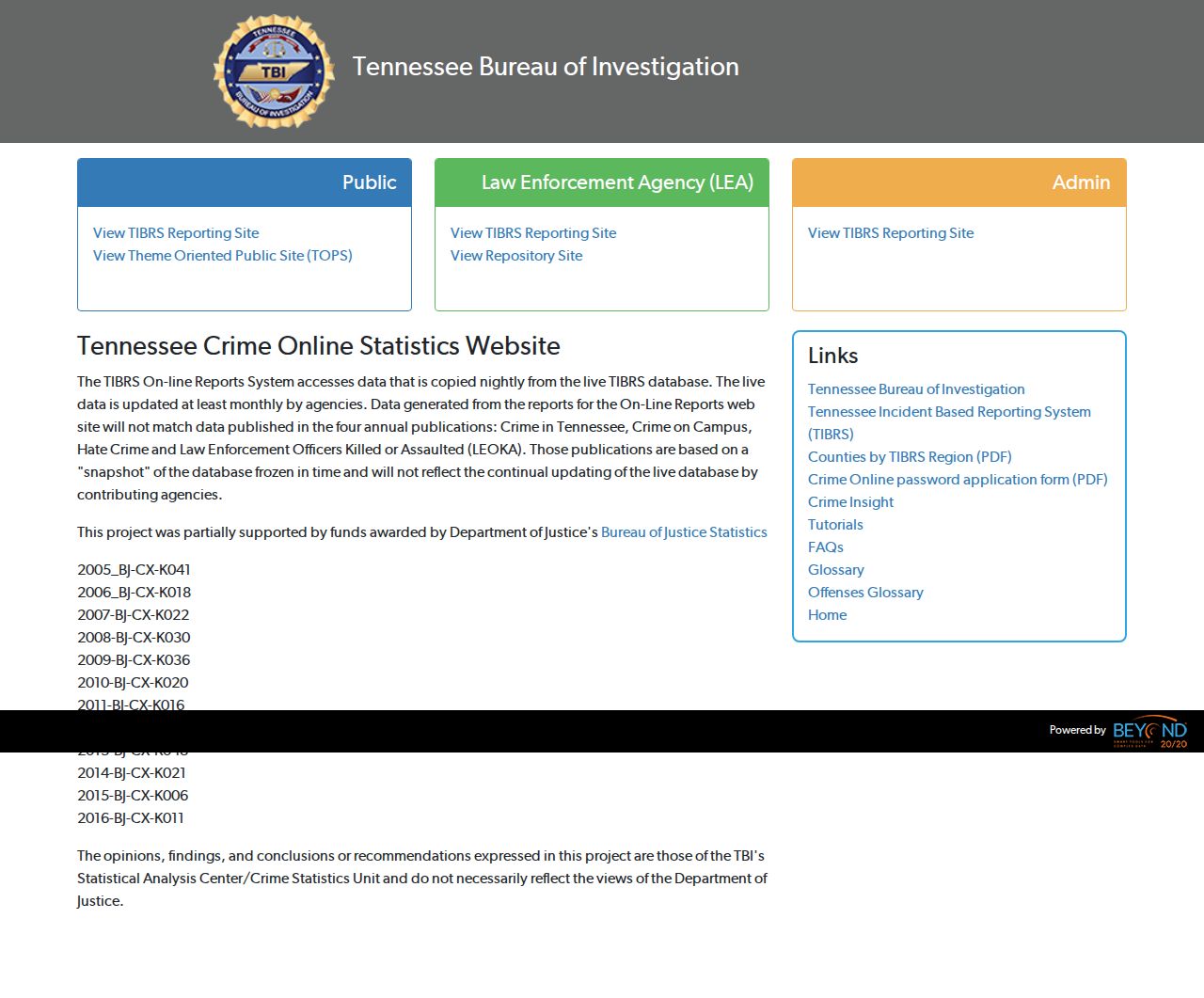
The agency selector matters because a Charleston mailing address does not turn another department's report into Charleston Police data.
Charleston Records in Local Context
Charleston is Bradley County's second and only other incorporated municipality after Cleveland. That is why the site's city list has two entries, not three. The Census incorporated-place tables supply the official ranking framework. The 2020 Census counted 664 residents in Charleston, while a later TBI agency estimate used 680 for police reporting. Those figures describe different vintages and should not be merged.
The official Charleston history traces the Hiwassee River settlement once known as Walker's Ferry, the Cherokee Agency, Fort Cass, and the 1838 Trail of Tears.
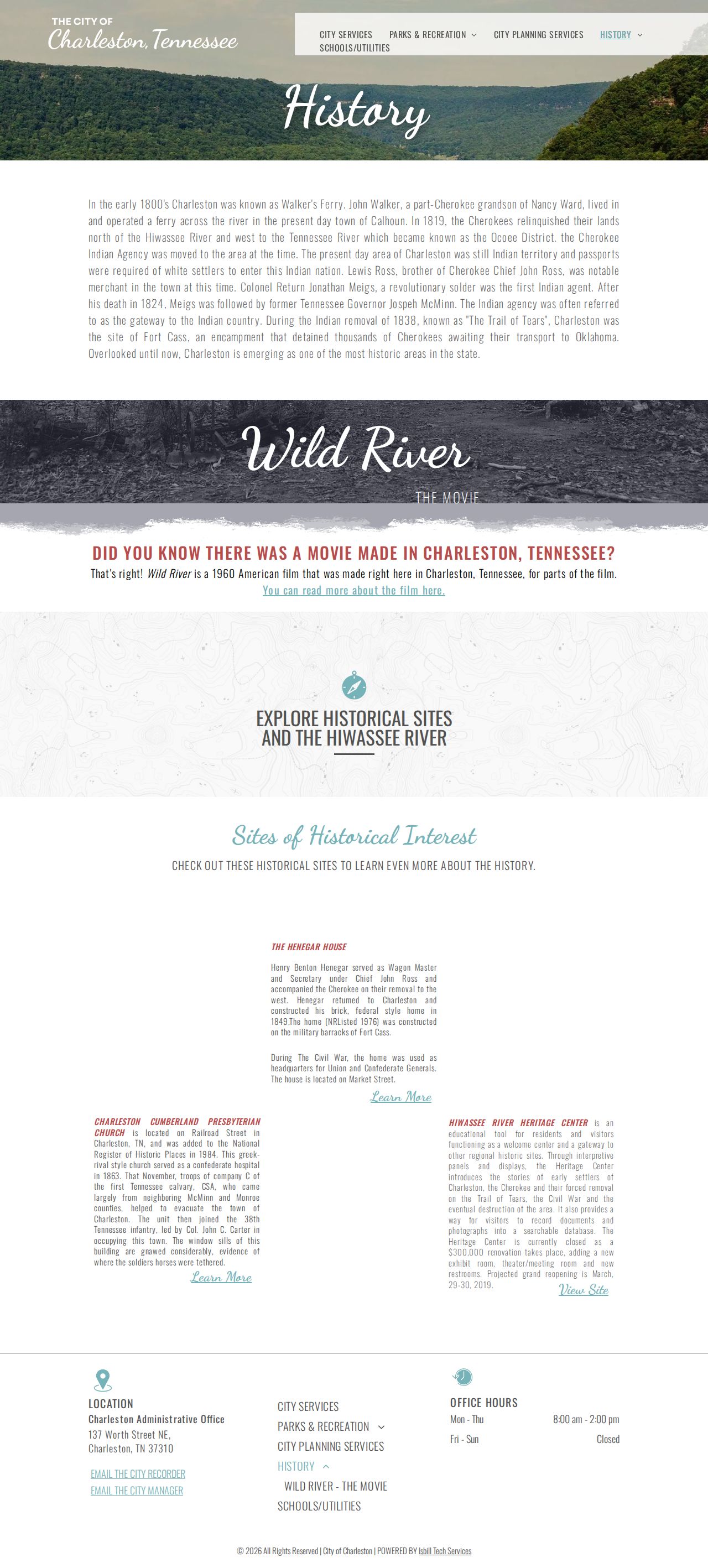
The Hiwassee River Heritage Center interprets Cherokee removal, settlement, and Civil War history, and parts of the 1960 film Wild River were filmed in Charleston. This civic past adds place context, but it should remain separate from claims about modern police or court records.
Public Access Rules in Charleston
The Tennessee Public Records Act governs requests for existing Charleston records, subject to exemptions and the Charleston custodian's written policy. Tenn. Code Ann. § 10-7-503 makes government records presumptively open to qualifying requesters unless another law closes them. Section 10-7-504 protects specified confidential records and sensitive details. A partial exemption does not always close the whole Charleston file, so ask for the nonexempt, segregable part and a written basis for any denial.
Court records also follow Tennessee Supreme Court Rule 34, along with sealing, redaction, and other law. Juvenile files, protected victim details, medical information, Social Security numbers, active investigative material covered by law, and expunged or sealed content do not receive the same public treatment as an ordinary adult file.
Key Statutes:
Tennessee Public Records Act, §§ 10-7-501 through 10-7-516 explains access to state and local government records.
Tennessee Supreme Court Rule 34 governs public access to court records, with lawful restrictions.
Tenn. Code Ann. § 40-32-101 governs expungement of qualifying criminal records.
The Tennessee General Assembly portal provides the current statutory source used to verify these rules.
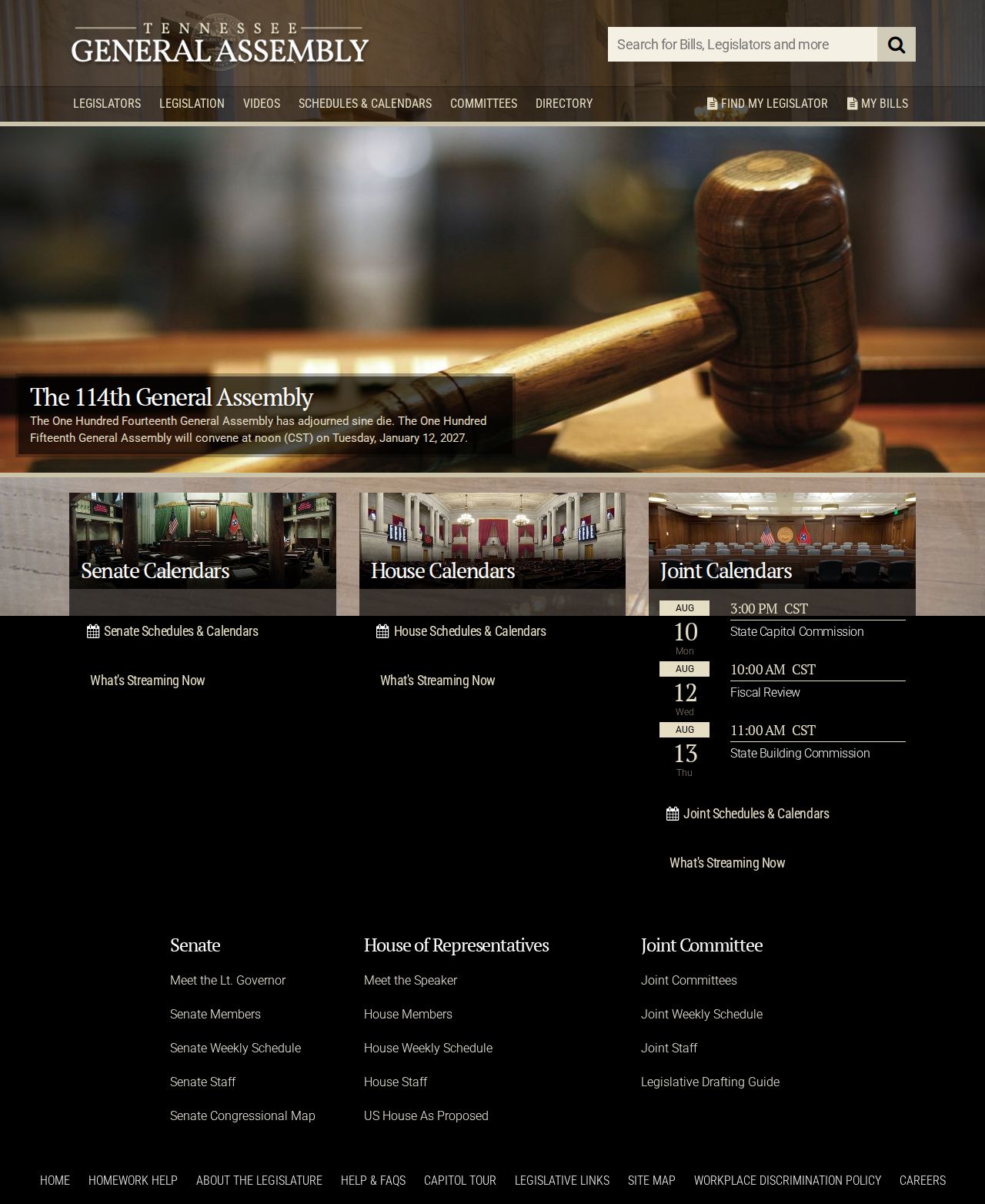
Current code text controls when an older city form, fee, or summary conflicts with a later law.